Mc34063 Constant Current Led Drivers For Mac
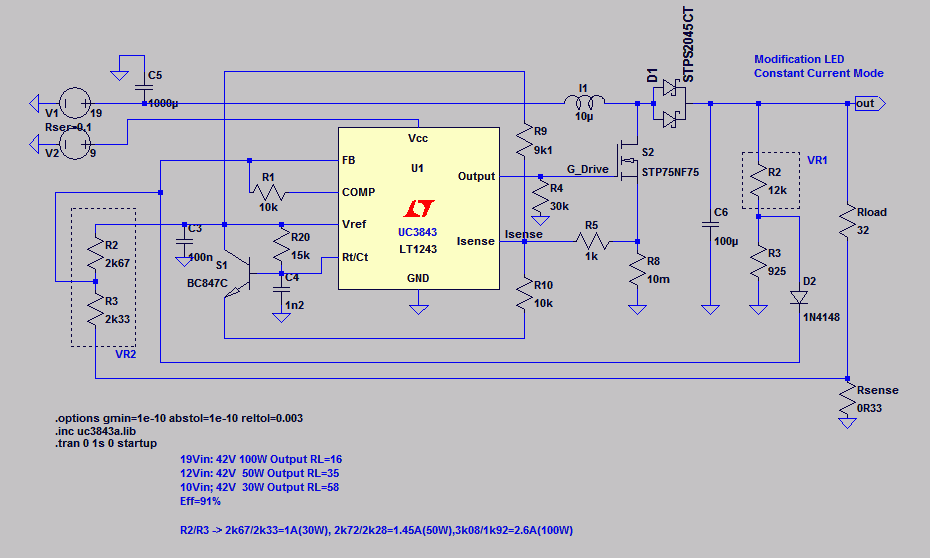
There are two main types ofLED drivers to choose from – constant current LED drivers and constant voltage LED drivers. To understand the difference, you must first understand what the purpose of LED drivers are in the first place. Although most people are aware of LED lights and their many benefits, not as many people realize that LED lights require LED drivers in order to operate. Buck Asynchronous MC34063. This is a very basic circuit taken mainly from the MC34063 datasheet. Buck Asynchronous MC34063 boosted with P-MOSFET. This extends the current range of the above circuit using a simple driver circuit. Buck Asynchronous MC34063 constant current circuit for driving LEDs.
We discussed earlier about the general characteristics of LED drivers. In this post, I’m going to tell you how to choose a right LED driver for your application. LED drivers are divided into two different categories: constant current and constant voltage drivers. But that is not the only thing you have to take into account when selecting the driver. In this post, we are focusing only in constant current drivers.
Constant current drivers are generally used when you need stabile current fed to your LED. With constant current driver, it is easier to manage the right brightness. You can check the datasheet of your light source whether it needs constant current or constant voltage. If it says for example 350mA, then it needs constant current. 12V or 24V means that you need a constant voltage driver.
In this post, we’ll take a look at constant current drivers.
How to choose a constant current driver for your application?
With these step by step instructions, you will find a suitable driver for your luminaire.
Step one: What forward current does your LED need?
As already mentioned, you should find the forward current your LED needs, from the datasheet. For example if your LED needs a current of 350mA, you should try to find a driver with 350mA output current.
Step two: How powerful driver do you need
The power consumption of the LED can also be found from the datasheet or at least it can be calculated with the data in the datasheet. The power consumption can be calculated by multiplying typical driving current value by typical forward voltage value that both can be found in the LED data sheet. Sometimes you can even find the power consumption directly from the datasheet.
Remember that if using multiple LED components, you have to find a driver that can feed all the LED components in your luminaire.
ELT 10W, 500mA LED driver
Step three: What output voltage range you need from the driver
Again take a look at the datasheet and check the voltage of the LED. If you have multiple LEDs, you should add the voltages together. Then you should find a driver with a voltage range that your LEDs fit into.
Step four: Do you need dimming? And what type of dimming?
A need for dimming is mainly dependent of the specification of your luminaire. If you don’t need dimming, a normal on/off driver is enough for you. If you need dimming, there are many different types of dimming, but that is a topic for another post.
Step five: What are the physical dimensions the driver has to fit into?
You should also consider if there are some limitations for the physical dimensions of the driver. These will obviously have an impact on your driver selection. You will generally find the physical dimensions of the driver from its datasheet.
Step six: What kind of environment the luminaire is used in?
Where is your luminaire designed to be used in? If it is designed to indoor use, then you probably won’t need to think about IP-classification so much. Of course if the luminaire is used in a room with a lot of dust or moisture, this has to be taken into account. Proshow styles 119 pxs.
IP20 class drivers it means that this driver can be used in indoor lighting applications but hardly stands harsh conditions in outdoor lighting unless the luminaire itself is waterproof thus protecting the driver.
But when designing a luminaire to outdoor use, then you should check that that the driver has good enough IP-class.
Usually IP67 drivers are heavier in weight, driver electronics is molded with plastic (e.g. potted) and the electrical throughputs of the wires both on primary voltage and the secondary voltage side are sealed with required protection against moisture.
ELT 10W, 350mA, IP67 driver
Step seven: Approvals, is the driver suited for European or American standards?
Does the driver have any approvals? And are the approvals for Europe (ENEC) or America (UL). This can generally be found from the datasheet of the driver.
So there you have it. With these steps you should be able to find a suitable LED driver for your application. If you don’t, please leave a comment or contact me directly.
You can also use our Light Builder to select a driver.